
When it comes to Wi-Fi 7 mesh home security, your cameras are only as good as the network they run on. In a Wi-Fi 7 mesh home security setup, a 4K doorbell that drops its feed every time someone streams Netflix downstairs is not protecting anything. For years, home Wi-Fi was the weak link in the smart security chain, and Wi-Fi 7 mesh home security addresses this, and most homeowners had no idea.
Table of Contents
- Table of Contents
- Why Wi-Fi 7 Mesh Home Security Beats Your Old Router
- What Wi-Fi 7 Actually Brings to the Table
- Top Wi-Fi 7 Mesh Systems for Smart Home Security
- Wi-Fi 7 and Matter: The Smart Security Sweet Spot
- How to Optimize Your Network for Security Cameras
- Setting Up Wi-Fi 7 Mesh for Security: A Step-by-Step Guide
- FAQ
- Wi-Fi 7 Mesh Home Security: The Bottom Line
Wi-Fi 7 is changing that reality. For Wi-Fi 7 mesh home security, the newest wireless standard brings multi-link operation, lower latency, and enough raw bandwidth to keep dozens of Wi-Fi 7 mesh home security devices running at the same time without a hiccup. Paired with the latest mesh systems from Eero, Netgear, and Asus, it addresses the specific Wi-Fi 7 mesh home security problems that smart cameras, locks, and sensors unreliable on older networks.
Table of Contents
- Why Wi-Fi 7 Mesh Home Security Beats Your Old Router
- What Wi-Fi 7 Actually Brings to the Table
- Multi-Link Operation (MLO)
- 320 MHz Channels and 4K QAM
- 6 GHz Band: The No-Traffic Zone
- Target Wake Time and Battery Savings
- Top Wi-Fi 7 Mesh Systems for Smart Home Security
- Eero Pro 7
- Netgear Orbi 770 Series
- Asus ZenWiFi BQ16 Pro
- Quick Comparison
- Wi-Fi 7 and Matter: The Smart Security Sweet Spot
- How to Optimize Your Network for Security Cameras
- Setting Up Wi-Fi 7 Mesh for Security: A Step-by-Step Guide
This guide breaks down what Wi-Fi 7 actually does for home security, which Wi-Fi 7 mesh home security systems are worth buying, and how to set up a Wi-Fi 7 mesh home security system so your Wi-Fi 7 mesh home security cameras never miss a frame.
Why Wi-Fi 7 Mesh Home Security Beats Your Old Router
In fact, most people buy a security camera, plug it in, connect it to Wi-Fi, and forget about it. That works fine until you have six cameras, a smart lock, a thermostat, three streaming TVs, and two phones fighting for the same 5 GHz band.
As a result, the symptoms creep up slowly. A camera takes an extra two seconds to load. A motion alert shows up 10 seconds after the person walked past. A two-way audio call cuts out mid-sentence. These are Wi-Fi problems, not camera problems.
According to a report on Wi-Fi 7 mesh home security adoption, a SafeHome.org industry report, the average smart home now has 25 connected devices. Each IP security camera pulls 8 to 25 Mbps depending on resolution. Add smart speakers, doorbell cameras, and sensors, and your old Wi-Fi 5 router is drowning. Wi-Fi 7 mesh home security systems solve this by giving every device its own lane on the information highway.
What Wi-Fi 7 Actually Brings to the Table
Multi-Link Operation (MLO)
However, this is the big one. MLO lets a device send and receive data on multiple frequency bands at the same time. If the 6 GHz band gets congested, your camera automatically shifts traffic to 5 GHz without dropping the connection. On older Wi-Fi, a device picks one band and sticks with it. If that band has interference, your Wi-Fi 7 mesh home security video feed stutters or drops.
For Wi-Fi 7 mesh home security setups, MLO means your cameras keep streaming even when someone starts a large download on another device. The reduction in worst-case latency — critical for Wi-Fi 7 mesh home security is significant: from roughly 45 ms down to 12 ms, according to independent testing by Tech Insider.
320 MHz Channels and 4K QAM
Furthermore, Wi-Fi 7 doubles the channel width from 160 MHz to 320 MHz and increases data encoding density with 4K QAM. In plain terms, more data moves through the pipe at once. A 4K security camera that struggled to push its full bitrate over Wi-Fi 6 can now stream smoothly, even at the edge of your network range.
6 GHz Band: The No-Traffic Zone
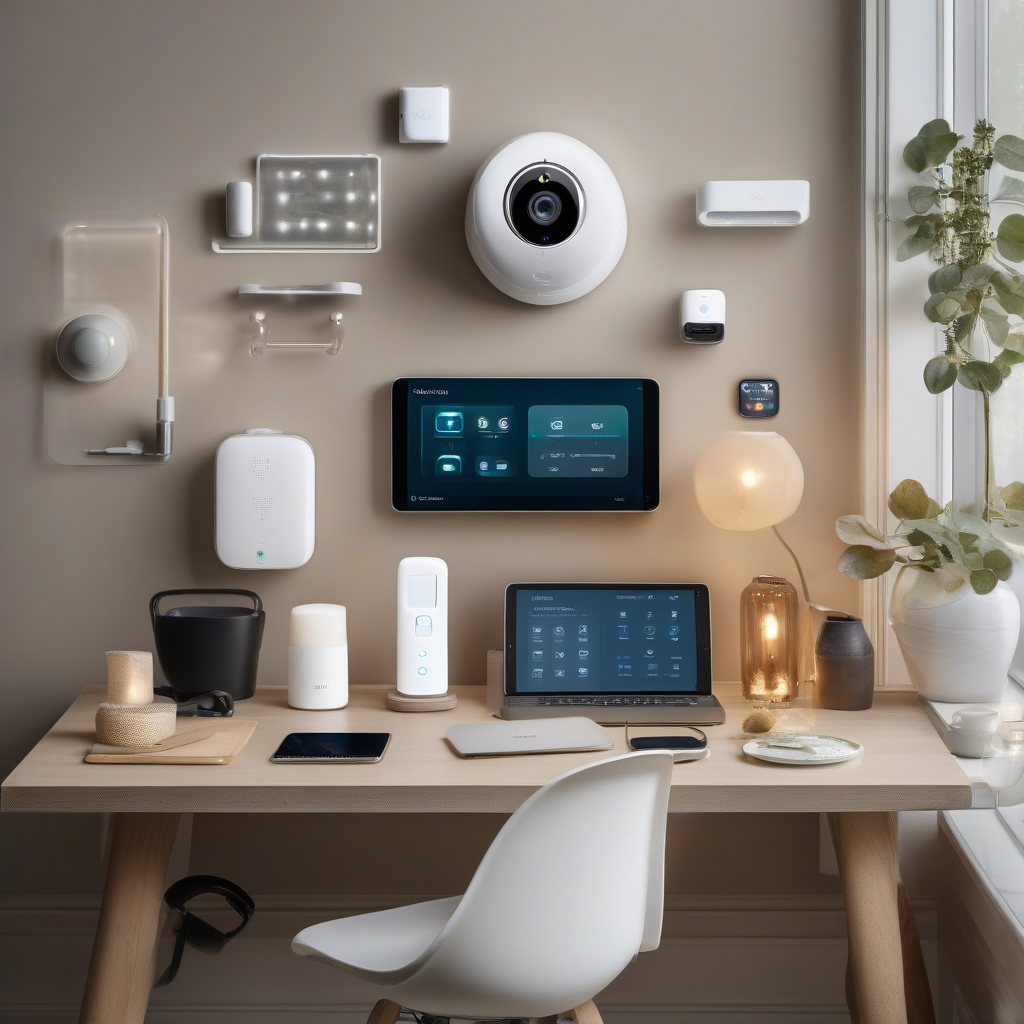
The 6 GHz band is essentially a brand-new highway with almost no cars. Most of your current devices still operate on 2.4 GHz and 5 GHz, so your Wi-Fi 7 security cameras and doorbells can use 6 GHz with almost zero interference. That matters for real-time video feeds where even brief packet loss creates visible artifacts or dropped frames.
Target Wake Time and Battery Savings
Wi-Fi 7 improves how battery-powered devices communicate with the router. Smart locks, window sensors, and outdoor cameras on battery benefit from more efficient scheduling, which means they wake up, send their data, and go back to sleep faster. Battery life on these devices improves noticeably, sometimes by 20 to 30 percent.
Top Wi-Fi 7 Mesh Systems for Smart Home Security
Not all mesh systems are equal when it comes to security features. Here is a comparison of the best options available in 2026.
Eero Pro 7
Eero Pro 7 is the simplest mesh system to set up, and it now supports full Wi-Fi 7 speeds with a 6 GHz band. During independent testing, the Eero Pro 7 maintained consistent speeds even through brick walls, a known weak point for older systems.
– Strengths: Dead-simple app setup, automatic firmware updates, Thread border router built in for Matter devices
– Weaknesses: Limited advanced settings, subscription needed for some security features (Eero Secure Plus)
– Best for: Homeowners who want something that works without configuration
The Eero app lets you monitor which devices are connected, set up a separate network for guests, and view bandwidth usage per device. This is useful for spotting a camera that has gone offline or detecting an unknown device on your network.
Netgear Orbi 770 Series
The Netgear Orbi 770 offers the best raw performance of any mesh system WIRED tested. It uses a dedicated backhaul band so the connections between router and satellites never compete with your devices.
– Strengths: Dedicated backhaul, excellent range, three Ethernet ports per satellite
– Weaknesses: Large physical footprint, expensive
– Best for: Large homes with many cameras and devices spread across multiple floors
Each Orbi satellite has three Ethernet ports, which means you can hardwire a camera or NVR directly to the nearest node. Hardwiring even one camera takes a significant load off the wireless network.
Asus ZenWiFi BQ16 Pro
The Asus ZenWiFi BQ16 Pro is the choice for power users. Two 6 GHz radio bands, two 10GbE ports, and the AiProtection Pro security suite included at no extra cost.
– Strengths: AiProtection Pro (free, no subscription), two 6 GHz bands, deep customization via web interface, QoS settings for prioritizing camera traffic
– Weaknesses: Complex interface, requires a Trend Micro data-sharing agreement for security features
– Best for: Users who want fine-grained control over network priorities and built-in malware protection
Asus includes AiProtection Pro powered by Trend Micro at no additional cost, blocking malicious sites and scanning incoming traffic for threats. For a smart home network, this is equivalent to having a built-in security guard watching the front door of your internet connection.
Quick Comparison
| Feature | Eero Pro 7 | Netgear Orbi 770 | Asus ZenWiFi BQ16 Pro |
|———|————-|——————-|———————-|
| Wi-Fi 7 | Yes | Yes | Yes |
| 6 GHz band | Yes | Yes | Yes (2x) |
| Ethernet ports per node | 2 | 3 | 1 (10GbE) + 1 (2.5GbE) |
| Built-in security | Subscription | Partial (Armor extra) | Free (AiProtection Pro) |
| Thread/Matter support | Yes | Limited | Yes |
| Setup difficulty | Easy | Moderate | Advanced |
| Approx. price (2-pack) | $350 | $400 | $500 |
Wi-Fi 7 and Matter: The Smart Security Sweet Spot
Matter, the unified smart home standard backed by Apple, Google, Amazon, and Samsung, gained real traction in 2026. Samsung SmartThings recently added support for Matter camera functionality with live streaming, two-way communication, motion detection, and event history.
This matters because Matter devices communicate locally over Thread, a low-power mesh networking protocol that runs alongside your Wi-Fi. Your Wi-Fi 7 mesh router with a built-in Thread border router (like the Eero Pro 7) can bridge Thread and Wi-Fi seamlessly. Your smart lock talks to your camera over Thread. Your camera streams over Wi-Fi 7. The whole system stays responsive because the protocols are not fighting each other for bandwidth.
Wi-Fi 7 mesh home security setups benefit directly from this dual-protocol approach. Sensors and locks use minimal power on Thread. High-bandwidth devices like cameras use the wide-open 6 GHz band on Wi-Fi 7. No interference, no bottlenecks.
How to Optimize Your Network for Security Cameras
Buying a Wi-Fi 7 mesh system is step one. Configuring it properly for security devices is what actually makes the difference.
Put cameras on the 6 GHz band whenever possible. Most cameras released in 2025 and later support Wi-Fi 6E or Wi-Fi 7 and can connect to 6 GHz. This band has the least congestion and the highest throughput, which is exactly what live video feeds need.
Give camera traffic priority with QoS. On Asus and Netgear systems, you can set Quality of Service rules that put camera streams above file downloads and streaming. A firmware update should never cause your front door camera to buffer.
Hardwire your NVR or major cameras. If your mesh system has Ethernet ports on the satellites (Orbi 770 has three each), run a cable to your most critical cameras. One wired camera takes zero wireless bandwidth and gives you the most reliable feed.
Separate your IoT network. Eero, Netgear, and Asus all support VLAN or guest network segmentation. Put your smart devices on a separate network from your laptops and phones. If a smart bulb gets compromised, the attacker cannot reach your cameras.
Keep firmware updated. This sounds obvious, but a 2026 report from Security.org found that 41 percent of smart home devices are running outdated firmware. Mesh routers that auto-update (Eero, for example) remove this friction entirely.
Setting Up Wi-Fi 7 Mesh for Security: A Step-by-Step Guide
1. Position the main router centrally. Avoid placing it in a basement or behind a TV. Elevation and central placement give you the best coverage.
2. Place satellite nodes halfway between the router and your cameras. Use the mesh system app to check signal strength at each camera location. Aim for at least -60 dBm.
3. Connect the router to your modem with an Ethernet cable. This is your backhaul to the internet. If you have multi-gig internet, use the 2.5 Gbps or 10 Gbps port.
4. Create a separate SSID for 6 GHz devices. This prevents older 2.4 GHz sensors from connecting to the wrong band and slowing things down.
5. Configure QoS to prioritize security camera traffic. On Asus, go to Adaptive QoS and select “Surveillance” mode. On Netgear, use the Traffic Prioritization settings.
6. Test each camera at its installed location. Stream live video for five minutes and check for stuttering or lag. If the feed drops, move the nearest mesh node closer.
7. Enable built-in security features. Turn on AiProtection (Asus), Armor (Netgear), or Eero Secure. These scan for malware and block suspicious traffic on your IoT network.
FAQ
Is Wi-Fi 7 worth it for home security cameras?
Yes, if you have three or more cameras or plan to add smart devices. The 6 GHz band eliminates congestion, and MLO keeps cameras connected even when the network is busy. If you have a single camera and a small apartment, Wi-Fi 6E is fine.
Can older Wi-Fi 6 cameras work on a Wi-Fi 7 mesh system?
Absolutely. Wi-Fi 7 is backward compatible. Your older cameras will connect on 5 GHz or 2.4 GHz, while your newer Wi-Fi 7 cameras take advantage of the 6 GHz band. The mesh system handles all the band steering automatically.
Do I need a subscription for mesh router security features?
In Wi-Fi 7 mesh home security, it depends. Asus includes AiProtection Pro free for the life of the product. Eero’s basic security features are free, but advanced threat detection requires Eero Secure Plus ($10/month). Netgear Armor costs $100/year after the first year. Factor subscription costs into your decision.
Will Wi-Fi 7 improve my smart lock reliability?
Indirectly, yes. Wi-Fi 7 frees up bandwidth and reduces latency on the whole network. Smart locks that connect over Wi-Fi will respond faster. Smart locks on Thread (via Matter) benefit from the Thread border router built into most Wi-Fi 7 mesh systems.
How many security cameras can a Wi-Fi 7 mesh system handle?
A typical Wi-Fi 7 mesh system handles 75 to 100 devices without breaking a sweat. For security cameras specifically, a 3-node mesh can comfortably run 10 to 15 cameras streaming simultaneously, especially if you put high-resolution cameras on the 6 GHz band and hardwire the NVR.
Wi-Fi 7 Mesh Home Security: The Bottom Line
Wi-Fi 7 mesh home security systems remove the network as a bottleneck for home security. The combination of MLO, 6 GHz, and wider channels means your cameras stream reliably, your alerts arrive on time, and your Wi-Fi 7 mesh home security devices stop fighting each other for bandwidth. Therefore, if your current router drops camera feeds or delivers motion alerts seconds late, upgrading to a Wi-Fi 7 mesh system is the single most impactful change you can make.
For Wi-Fi 7 mesh home security, the Eero Pro 7 is the best pick for most people because it is simple, reliable, and includes a Thread border router for Matter devices. Power users who want built-in security and deep control should look at the Asus ZenWiFi BQ16 Pro. Large homes with Wi-Fi 7 mesh home security cameras spread across multiple floors will benefit from the Netgear Orbi 770 Series and its dedicated backhaul.
Your Wi-Fi 7 mesh home security system is only as strong as the network it runs on. Make sure that Wi-Fi 7 mesh home security network is built for 2026.
Internal resources:
– Smart Home for Beginners: Essential Security Checklist
– Edge AI Home Security: On-Device Intelligence Guide