
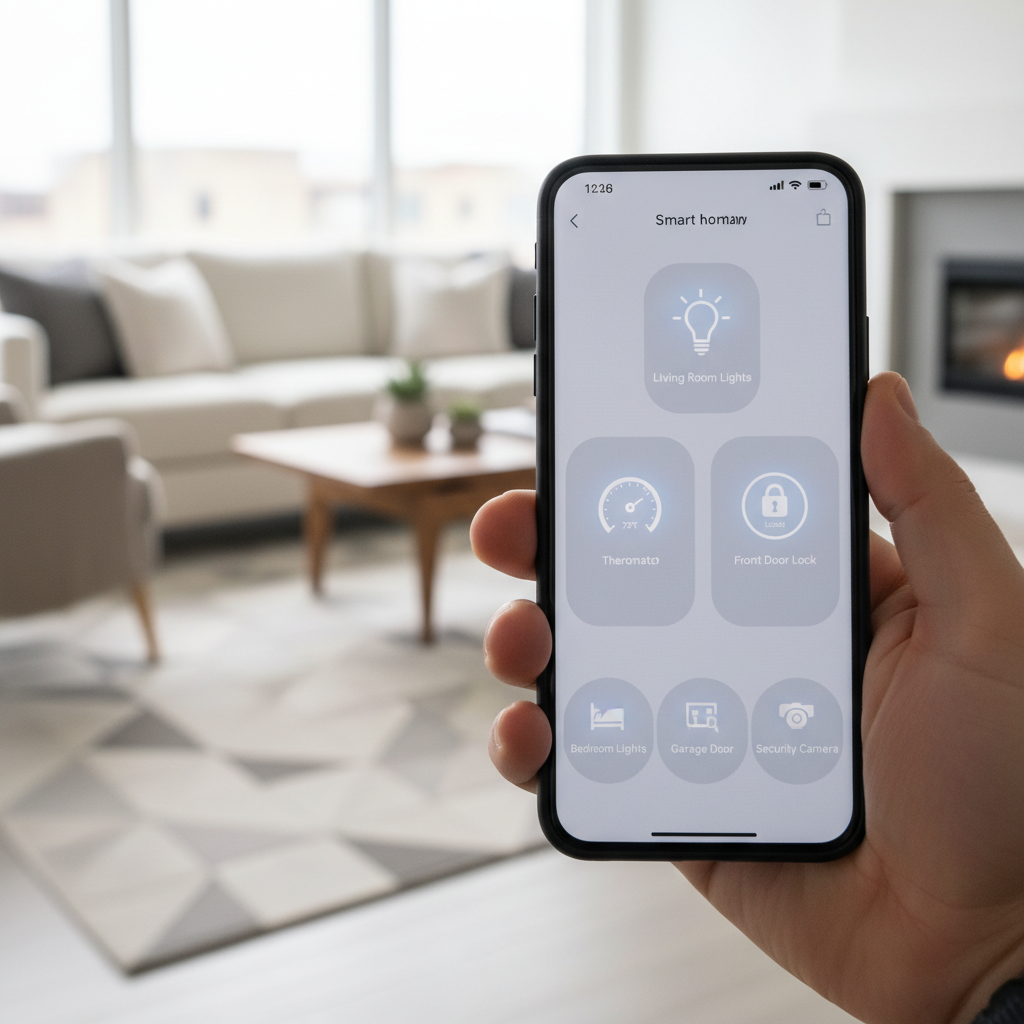
AI agents for the smart home are more than just voice‑activated gadgets; they’re software that can map out and run multi‑step routines across a whole suite of devices on their own. Instead of saying “turn off the lights,” you might ask an AI agent to “get the house ready for movie night,” and it will dim the lights, lower the blinds, power up the TV and soundbar, and tweak the thermostat, all from that single request. By 2026, services such as Amazon’s Alexa+ and Google’s Gemini for Home are turning that vision into reality, moving us from simple voice commands to full‑blown home‑automation orchestration.
Table of Contents
What Makes an AI Agent Different From a Voice Assistant
A classic voice assistant simply maps a command to one action: “turn on the kitchen light” makes the kitchen light come on. An AI‑agent‑powered smart‑home platform, by contrast, grasps the end goal, breaks it down into steps, decides which devices need to act, and runs the sequence while adapting if something goes awry. You’ll notice the difference most in three places: multi‑step planning, session‑wide context awareness, and the ability to coordinate devices from different makers with a single request.
The Leading AI Agent Platforms in 2026
1. Amazon Alexa+
Best for: Households already invested in Amazon Echo devices.
Alexa+ layers a subscription‑based generative AI on top of the existing Alexa ecosystem, giving it the chops to handle more conversational, multi‑step requests and to retain context from earlier in the chat instead of treating every utterance as an isolated command.
2. Google Gemini for Home
Best for: Homes with a mix of Google Nest and third‑party Matter devices.
Gemini for Home builds on Google’s smart‑home foundation by adding agentic abilities, aiming to choreograph routines across a broader slate of certified gear while learning your household’s rhythms over time.
3. Emerging Third‑Party Agent Platforms
Best for: Advanced users who want a device‑agnostic layer on top of multiple ecosystems.
A fresh category of AI‑agent software is popping up that sits above all the major platforms, trying to unify Alexa, Google, and Matter‑compatible devices under one orchestration layer, no matter the brand.
Real-World Use Cases for AI Agents in Smart Home Setups
- Multi‑step routines from a single request: Saying “I’m heading to bed” can automatically lock doors, arm the security system, switch off non‑essential lights, and set a sleep‑friendly thermostat.
- Cross‑device troubleshooting: Some agents now flag a smart lock’s low battery or a camera that’s gone offline, so you don’t have to hunt through each app yourself.
- Learning preferences over time: Instead of forcing you to rebuild the same routine over and over, the platform gradually fine‑tunes lighting and temperature settings based on weeks of observed behavior.

What to Check Before Adopting an AI Agent Platform
- Device compatibility: Make sure your cameras, locks, thermostats, etc., are certified for the platform you’re eyeing. Matter certification gives the broadest coverage.
- Subscription costs: The most powerful agent features usually sit behind a paid tier (Alexa+ is a prime example), so factor in that recurring expense as well as any hardware outlay.
- Privacy and data handling: Because these agents process more contextual data, review what gets stored, for how long, and who can see it before you enable deep automation.
- Fallback behavior: Ask how the system reacts when a multi‑step task can’t be completed: some platforms clearly report partial failures, while others stay silent.
If you’re piecing together a smart‑home security system that plays nicely with an AI agent, check out our guide to the best smart home security systems for 2026 and browse our comparison of the best smart home hubs before locking in a central controller.
AI Agents vs. Traditional Voice Assistants
| Feature | Traditional Voice Assistant | AI Agent Platform |
|---|---|---|
| Command style | Single action per command | Multi‑step goals from one request |
| Context | Resets each command | Remembers context across a session |
| Device coordination | One device at a time | Orchestrates multiple devices together |
| Cost | Usually free with hardware | Increasingly subscription‑based |
Frequently Asked Questions
What is an AI agent in a smart home context?
An AI‑agent smart‑home platform is software that plans and carries out multi‑step tasks across several devices from a single request, rather than matching one command to one device action like a classic voice assistant.
Do I need new hardware to use an AI agent platform?
Not necessarily. Services such as Alexa+ and Gemini for Home are largely software overlays on top of your existing ecosystem, though the richness of automation will depend on how many of your devices are certified and compatible.
Are AI agent platforms free?
Not always. The most sophisticated agent features often live behind a paid subscription on top of the base voice assistant, so double‑check current pricing before assuming everything is included.
Can different brands of devices work together under one AI agent?
Increasingly yes (especially for gear that’s Matter‑certified), though seamless cross‑brand orchestration still hinges on the specific agent platform and the devices you’ve chosen.