

Google is reshaping the connected living landscape with a groundbreaking update that transforms how our homes think, react, and serve us. In May 2026, the tech giant began rolling out a new generation of ambient AI smart home automation powered by Gemini, designed to move beyond simple voice commands and motion sensors. This time, your security cameras become intelligent eyes, enabling predictive, context-aware routines that anticipate your needs before you speak a word.
Table of Contents
- Table of Contents
- What Is Google's New Ambient AI Smart Home Automation?
- How Gemini Camera Automations Actually Work
- Real-World Scenarios and Everyday Benefits
- The Critical Infrastructure: Matter, Thread, and WiFi 8
- Why This Represents a Paradigm Shift
- Privacy, Security, and Adoption Considerations
- Conclusion: Prepare Your Home for the AI Era
- Frequently Asked Questions
According to reports from Residential Tech Today and Google Home announcements, the feature interprets contextual clues. If a camera positioned near your entryway sees you returning with grocery bags, it can automatically unlock the door, switch on hallway lights, and even queue your kitchen's smart display to show a recipe—without any manual input from you. This shift from reactive to proactive intelligence marks a defining moment for the smart home industry.
Table of Contents
- What Is Google's New Ambient AI Smart Home Automation?
- How Gemini Camera Automations Actually Work
- Real-World Scenarios and Everyday Benefits
- The Critical Infrastructure: Matter, Thread, and WiFi 8
- Why This Represents a Paradigm Shift
- Privacy, Security, and Adoption Considerations
- Frequently Asked Questions
What Is Google's New Ambient AI Smart Home Automation?
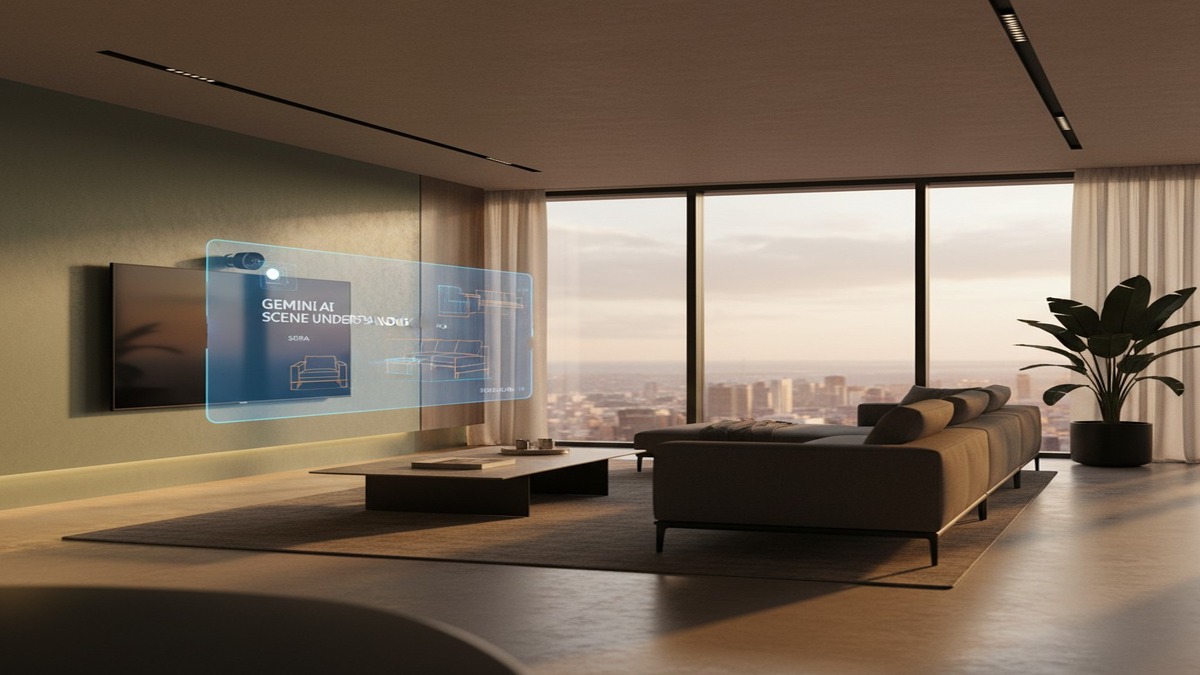
The May 2026 update to Google Home introduces Gemini-powered camera automations that fundamentally rethink how devices communicate. Instead of relying on basic motion alerts or time-based schedules, connected cameras can now analyze live video feeds using on-device and cloud AI. This deeper understanding allows your smart home to trigger complex routines based on specific visual events, bringing true ambient AI smart home automation into the mainstream.
According to reports from Residential Tech Today and Google Home announcements, the feature interprets contextual clues. If a camera positioned near your entryway sees you returning with grocery bags, it can automatically unlock the door, switch on hallway lights, and even queue your kitchen's smart display to show a recipe—without any manual input from you. This shift from reactive to proactive intelligence marks a defining moment for the smart home industry.
How Gemini Camera Automations Actually Work
Traditional smart home triggers require exact conditions: a door sensor opens, a motion detector activates, or a specific voice command is issued. Google's new system, however, uses natural language understanding. During setup, homeowners describe desired events in plain English—"when I get home with groceries"—and Gemini maps those descriptions to visual recognition patterns.
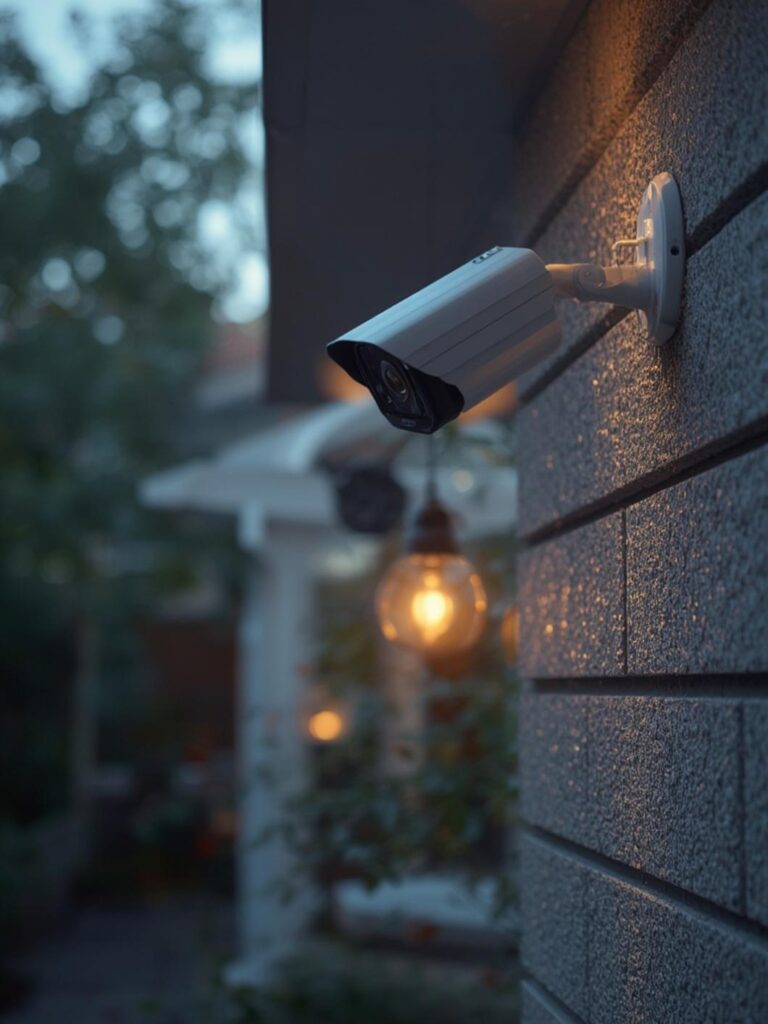
The artificial intelligence running behind the scenes processes camera footage securely, identifying objects, gestures, and scenarios rather than just pixels. This means the system understands nuance: it can distinguish between a delivery driver dropping off a package and a family member arriving home. By incorporating Google's latest large language model capabilities into the home environment, ambient AI smart home automation achieves a level of contextual awareness previously limited to science fiction.
- Visual Recognition: Cameras identify specific objects, people, and activities to trigger precise routines.
- Natural Language Setup: Users describe automations conversationally instead of building rigid logic chains.
- Context Awareness: The AI considers time of day, household occupancy, and historical behavior to make smarter decisions.
- Privacy Controls: Google emphasizes on-device processing where possible, giving users granular control over data usage.
Real-World Scenarios and Everyday Benefits
The practical applications of this technology extend far beyond convenience. For elderly family members living independently, a camera that recognizes a fall can instantly alert caregivers and unlock the front door for emergency responders. For busy parents, visually triggered automations can pause music and flash lights when a child enters a restricted area, creating hands-free safety boundaries.
Consider a typical evening arrival. Your outdoor camera identifies your car pulling into the driveway. Before you reach the door, the pathway lights illuminate, the thermostat adjusts to your preferred temperature, and your smart speaker begins playing your wind-down playlist. This seamless choreography is the promise of modern ambient AI smart home automation: technology that dissolves into the background while actively improving daily life.
Explore our guide to smart home security systems 2026 for complementary protection strategies.
The Critical Infrastructure: Matter, Thread, and WiFi 8
These advanced automations require rock-solid connectivity, and Google has positioned its ecosystem at the center of next-generation networking standards. Full Matter and Thread support ensures that cameras, lights, locks, and sensors from different manufacturers communicate reliably, removing the friction of incompatible ecosystems that once plagued smart home owners.
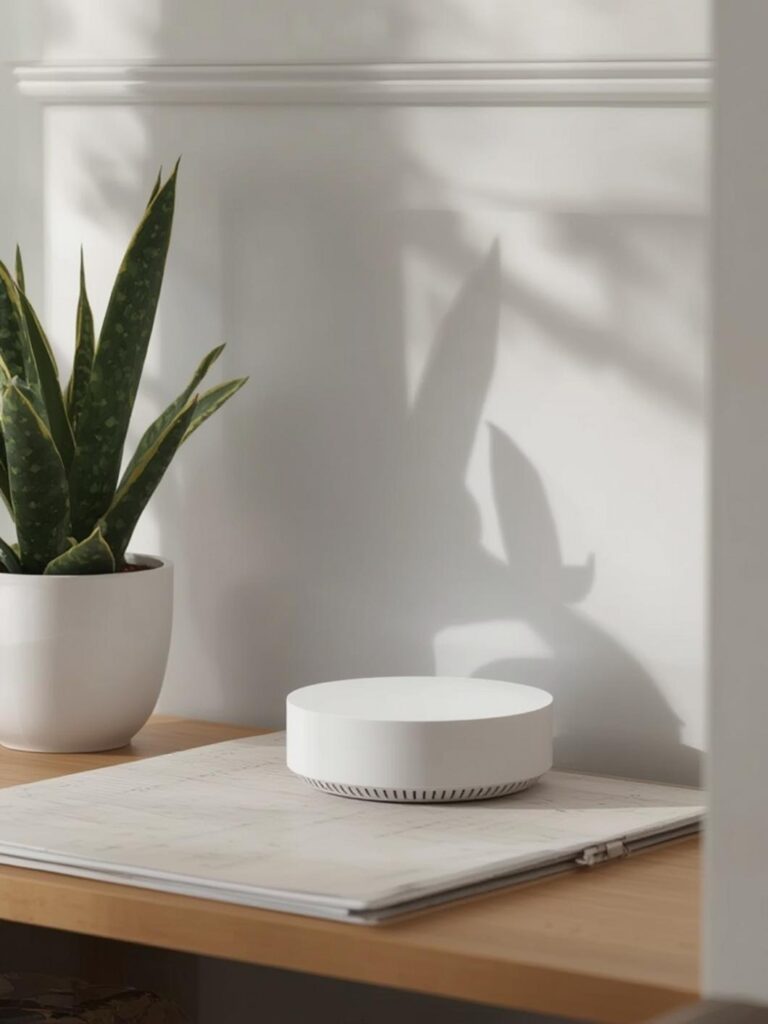
Equally important is the backbone carrying all this data. At CES 2026, ASUS unveiled the ROG NeoCore, a WiFi 8 mesh router concept purpose-built for bandwidth-intensive, low-latency smart home environments. The compact, twelve-sided design demoed at the show represents the first real-world WiFi 8 hardware, promising higher throughput and better range for homes packed with 4K cameras and always-on AI assistants.
Learn more about home internet infrastructure to support your smart home network.
Why This Represents a Paradigm Shift
For years, the smart home industry chased the dream of a truly intelligent living space. Early systems offered remote control; later systems added scheduling and voice activation. Google's May 2026 update introduces something fundamentally different: perception. By giving the home the ability to see and interpret, it transforms scattered gadgets into a unified, sentient environment.
This evolution toward ambient AI smart home automation reduces cognitive load. You no longer need to remember app controls, memorize voice phrases, or manually activate scenes. The home observes, learns, and adapts. In doing so, Google is pushing deeper into ambient computing, where technology anticipates human intent rather than waiting for explicit commands.
Privacy, Security, and Adoption Considerations
With great intelligence comes legitimate concern. Having AI analyze video footage inside and around the home raises important privacy questions. Google has addressed this by allowing users to define which cameras participate in automations, where processing occurs, and how long data is retained. Industry experts recommend auditing camera placement, enabling two-factor authentication on all accounts, and regularly reviewing automation logs to ensure the system behaves as intended.
Adoption is rolling out gradually, with early access expanding across supported markets. Users with recent Nest cameras and compatible Google Home hubs will see the new automation options appear in their apps throughout mid-2026.
Conclusion: Prepare Your Home for the AI Era
Google's Gemini-powered camera automations signal that ambient AI smart home automation is no longer a futuristic concept—it is arriving now. By merging computer vision with intelligent routines, Google Home is creating living spaces that understand context and respond proactively. As supporting infrastructure like Matter, Thread, and WiFi 8 hardware matures, the dream of an effortless smart home is finally within reach.
If you are still relying on static timers and manual voice commands, 2026 is the year to upgrade your ecosystem. Evaluate your current cameras, strengthen your mesh network, and experiment with Gemini-powered routines to experience the next level of intelligent living. The future of home automation is not just connected; it is perceptive, adaptive, and genuinely helpful.
Frequently Asked Questions
Q: What is ambient AI smart home automation?
A: Ambient AI smart home automation uses multimodal AI, specifically Google's Gemini, to interpret camera footage and automatically trigger context-aware routines—such as unlocking doors, adjusting lighting, or sending alerts—based on visual events without manual input.
Q: How does Gemini smart home automation differ from traditional automations?
A: Traditional automations rely on fixed triggers like motion sensors or schedules. Gemini-powered automations use natural language understanding to interpret real-world visual scenes contextually—distinguishing between a delivery driver and a family member and triggering appropriate responses.
Q: What infrastructure is needed for ambient AI smart home automation?
A: Full ambient AI automation requires Matter and Thread compatible devices for reliable cross-brand communication, a robust mesh network (WiFi 8-ready routers like ASUS ROG NeoCore), and a Google Home Premium Advanced subscription ($20/month).
Q: Is Gemini smart home automation available globally?
A: As of mid-2026, rollout is limited to early access participants in the United States enrolled in the Google Home Public Preview program, with English-only interface. Phased global expansion is expected later in 2026.