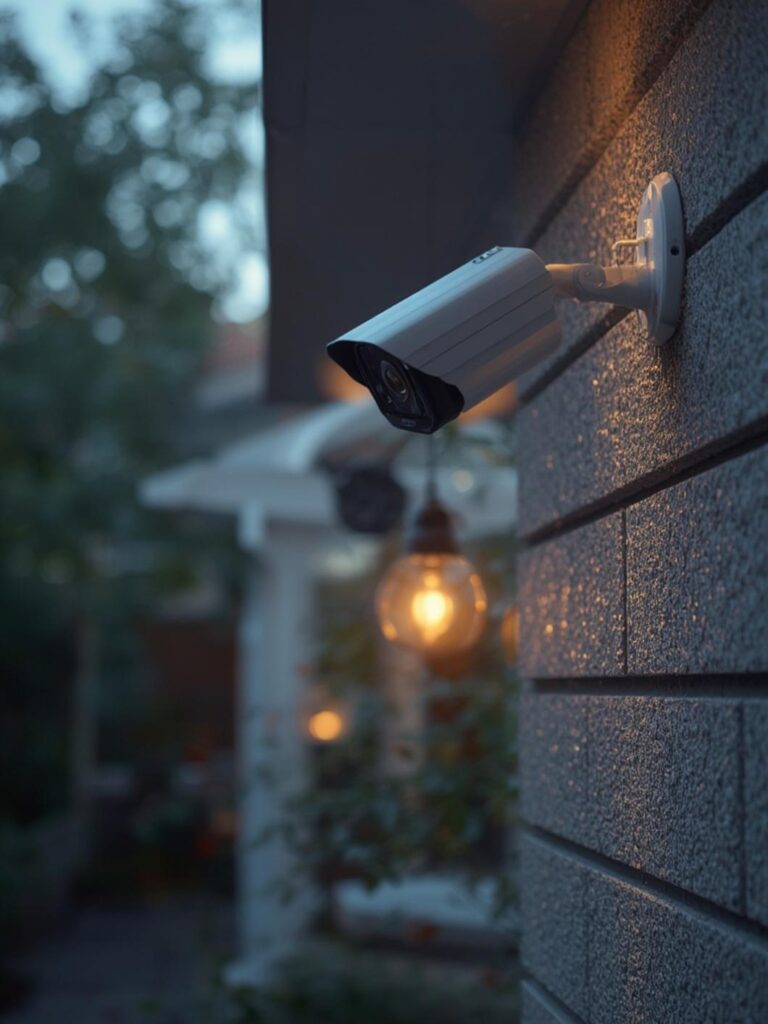


AI Smart Home Automation: The Complete 2025–2026 Guide
In 2026, over 77 million US households actively use smart home devices — and artificial intelligence is now the engine driving most of them. But here’s the thing most guides won’t tell you: there’s a wide gap between owning a smart bulb and running a genuinely intelligent home. Real AI smart home automation learns your routines, predicts your needs, cuts your energy bills, and flags security threats before you notice them.
Table of Contents
- What Is AI Smart Home Automation?
- How Big Is the AI Smart Home Market in 2025?
- What AI Smart Home Devices Are Worth Buying in 2025?
- How Much Can AI Reduce Your Home Energy Bills?
- How Does AI Improve Home Security?
- What Should You Know About AI Smart Home Privacy?
- What Does an AI Smart Home Actually Cost?
- How Do I Start Building an AI Smart Home?
- Frequently Asked Questions About AI Smart Home Automation
- The Bottom Line on AI Smart Home Automation
This guide covers everything you actually need to know: what AI home automation is (and how it differs from basic smart home setups), which devices are worth the money in 2025, how much energy and cost savings you can expect, how AI is changing home security, and how to start building your own system — whatever your budget.
Key Takeaways
- The AI smart home market reached $18.47 billion in 2025, growing to a projected $126 billion by 2035 at 21.3% annually (InsightAce Analytic, 2026).
- AI-powered thermostats cut heating and cooling costs by 10–23% per year, according to the US Department of Energy.
- In 2026, 28% of home security device users already rely on AI person and package detection (SafeHome.org, 2026).
- Google’s Gemini for Home now connects over 800 million devices via the Matter protocol (Google Developers Blog, Oct 2025).
- You can build a functional AI smart home starter setup for as little as $200–$500.
What Is AI Smart Home Automation?

AI smart home automation is the use of machine learning, natural language processing, and computer vision to manage home devices intelligently — learning from your habits rather than just following fixed rules. A standard smart home runs on “if-then” logic: if the door opens, turn the light on. An AI smart home goes further: it figures out that you leave for work at 7:30 AM on weekdays, adjusts the thermostat thirty minutes before you wake, dims lights in the rooms you’re not using, and detects when something unusual happens while you’re away.
Three core AI technologies power modern smart homes:
- Machine learning (ML): Devices analyze your usage patterns over days and weeks, then optimize automatically. Google Nest Thermostat’s learning mode is a classic example.
- Natural language processing (NLP): Voice assistants (Alexa, Google Assistant, Siri) now understand complex multi-step requests and follow-up questions, not just isolated commands.
- Computer vision: AI security cameras distinguish people from pets, vehicles, and falling leaves — dramatically reducing false alerts compared to older motion sensors.
The most significant shift in 2025 is the arrival of large language model (LLM) integration. Google’s Gemini AI, now embedded in the Nest ecosystem, can handle conversational home control: “Gemini, I’m having people over on Friday evening — set the mood.” That kind of contextual, multi-device orchestration wasn’t possible two years ago.
Whether you’re a tech enthusiast building a custom Home Assistant setup or a first-timer picking up an Amazon Echo, the foundation is the same: smart devices plus an AI layer that connects and learns from them.
AI smart home automation combines machine learning, voice AI, and computer vision to manage home devices intelligently — moving beyond rule-based schedules to systems that learn from your behaviour. In 2025, over 51% of US households already use at least one smart home device, with AI-enabled features driving the fastest growth (Statista via Makerstations.io, 2026).
How Big Is the AI Smart Home Market in 2025?
In 2025, the global AI smart home technology market is valued at $18.47 billion, according to InsightAce Analytic’s February 2026 report — and it’s growing at a 21.3% compound annual rate, on course to reach $126.06 billion by 2035. That’s a nearly sevenfold increase in a single decade. What’s driving it? Falling device costs, rising energy prices, and an increasingly capable generation of AI assistants that make setup simpler than ever.
The adoption numbers back this up. As of 2026, 51.37% of all US households — roughly 77 million homes — actively use smart home devices (Statista via Makerstations.io, 2026). That figure jumped from 49% adoption in the US and Canada in 2024 to 59% in 2025, according to the ASHB Annual Survey. The market is no longer early-adopter territory.
The platform news also signals scale. In October 2025, Google announced that over 800 million devices are now connected to the Google Home ecosystem via its Works with Google Home and Matter APIs (Google Developers Blog, Oct 2025). That same announcement replaced Google Assistant with Gemini across all Nest devices — the single biggest shift in consumer AI for the home since the original Echo launched in 2014.
In 2025, the AI smart home technology market reached $18.47 billion — up from an estimated $15.3 billion in 2024 — and is projected to hit $126.06 billion by 2035 at a 21.3% CAGR, driven by falling hardware costs and growing energy management demand (InsightAce Analytic, AI in Smart Home Technology Market, Feb 2026).
What AI Smart Home Devices Are Worth Buying in 2025?
As of 2025, 65% of smart home users control their devices through voice assistants — and the voice assistant market itself is growing from $9.05 billion in 2025 to $11.71 billion in 2026 (DataM Intelligence via SQ Magazine, 2026). That number tells you something important: the hub and the voice layer are the most critical investments. Everything else builds on them.
Smart Hubs and Voice Assistants
Your hub is the brain of the operation. The three dominant ecosystems are Google Home (now Gemini-powered), Amazon Alexa, and Apple HomeKit. Amazon Echo holds 67% market share among smart speaker owners in the US, with roughly 100 million users (NPR/Edison Research via SQ Magazine, 2025). Google’s Nest lineup runs Gemini AI since October 2025 — a significant upgrade in contextual understanding. Apple HomePod Mini suits households already in the Apple ecosystem.
For privacy-focused users, Home Assistant is the open-source alternative that processes everything locally on a dedicated hub (Home Assistant Green or a Raspberry Pi). No cloud. No data sharing. It supports the Matter protocol and integrates with thousands of devices.
Smart Thermostats
This is your best return-on-investment device. The Ecobee SmartThermostat Premium and Google Nest Thermostat both use AI learning modes that adapt to your schedule within the first week. The Nest’s Seasonal Savings feature adjusts for weather changes automatically. After two weeks, most users never touch it manually again.
AI Security Cameras
Ring (Amazon) and Google Nest Cam dominate here, but Reolink offers compelling value. All three now use on-device or cloud AI to distinguish people, vehicles, and packages — not just generic motion. That distinction matters: a cat triggering your camera at 3 AM is very different from a person.
Smart Lighting
Philips Hue remains the most capable ecosystem for AI-driven scenes that respond to time of day, calendar events, and even your TV’s content. LIFX is a solid Wi-Fi alternative without a hub requirement. Lutron Caseta switches are the most reliable for controlling existing fixtures.
The Matter Protocol: Why It Changes Everything
Matter is the cross-brand interoperability standard that means your Google Nest thermostat, Amazon Echo hub, and Apple HomeKit app can all talk to the same smart lock. In 2025, Matter support is now widespread, and it’s the single biggest reason AI smart home setup is less painful than it was two years ago.

In 2025, 65% of smart home users control their devices via voice assistants, and Amazon Echo retains 67% of the US smart speaker market with approximately 100 million active users (NPR/Edison Research, Smart Audio Report, 2025). Google’s October 2025 Gemini for Home launch — now connecting 800 million+ devices — is the most significant platform shift since Alexa’s debut.
How Much Can AI Reduce Your Home Energy Bills?
This is where AI smart home automation earns its keep. In 2025, connected smart thermostats reduce heating and cooling costs by 10–23% annually, according to the US Department of Energy — with higher savings in homes that previously had poor temperature management habits. Since heating and cooling account for roughly 43% of the average US household energy bill, that’s a meaningful number.
Academic research goes further. A 2025 meta-analysis published in Springer Energy Informatics found that AI systems using reinforcement learning achieved 22.3% (±8.4%) energy savings in smart building HVAC systems — and hybrid AI methods pushed that to 28.1% (±12.3%). These are commercial building studies, but the underlying algorithms are the same ones powering Nest and Ecobee’s learning modes at home.
The prediction side is equally impressive. A January 2025 paper in Oxford Academic’s Clean Energy (Vol. 9, Issue 2) demonstrated that an artificial neural network (ANN) model achieved 99.96% training accuracy and 99.99% validation accuracy in predicting residential energy consumption patterns. What that means practically: AI can forecast your home’s energy use with near-perfect precision and schedule devices accordingly.
A straightforward payback calculation makes the case: the average US household spends roughly $900/year on heating and cooling. A 22% AI-driven reduction saves ~$198/year. A Google Nest Thermostat costs $129. That’s a payback period of under eight months — before you factor in any energy utility rebates.
In 2025, AI reinforcement learning achieves 22.3% (±8.4%) average energy savings in smart home HVAC systems — rising to 28.1% (±12.3%) with hybrid AI methods — while the US Department of Energy confirms smart thermostats alone reduce heating and cooling costs by 10–23% annually (Springer, Energy Informatics, 2025; US DOE).
How Does AI Improve Home Security?
In 2026, 28% of home security device users already rely on AI-powered person and package detection — and 39% are interested in or actively using AI facial recognition to identify who’s at the door (SafeHome.org, AI-Powered Home Security: 2026 Predictions). That adoption has outpaced most industry analysts’ estimates from even two years ago.
What’s driving the shift? Three things. First, the false alert problem: traditional motion sensors can’t tell a dog from a delivery driver, so they alert constantly and users start ignoring notifications. AI cameras trained on millions of images now distinguish humans, vehicles, animals, and packages in near real time. That specificity makes alerts meaningful again.
Second, anomaly detection. Modern AI security systems learn your home’s normal activity pattern — when you leave, when you return, when lights go on and off. Any deviation triggers an alert. That’s different from motion detection; it’s behavioral analysis. A door opening at 2 AM is more suspicious than the same door opening at 6 PM.
Third, predictive threat recognition. Some premium systems now cross-reference local crime data and flag unusual activity before an incident occurs. It’s early-stage technology, but it signals where AI security is heading.
The most capable AI security cameras in 2025: Google Nest Cam (face-familiar alerts, seamless Google Home integration), Ring Floodlight Cam Wired Pro (Amazon’s 3D motion detection and delivery notifications), and Reolink Argus 4 Pro (on-device AI processing, no subscription fee for person detection).
In 2026, 28% of home security device users already rely on AI person and package detection, with 39% interested in AI facial recognition — making computer vision the fastest-growing feature in consumer security hardware (SafeHome.org, “AI-Powered Home Security: 2026 Predictions,” retrieved June 2026).
What Should You Know About AI Smart Home Privacy?
Here’s the question most smart home guides avoid: what’s actually happening with your data? Amazon, Google, and Apple all process voice commands through their cloud servers. That means audio snippets travel to data centers and are used — at least in aggregate — to improve their AI models. Apple applies the strongest privacy protections by default (on-device processing for many Siri requests); Google and Amazon are more permissive unless you actively restrict data sharing in your account settings.
After testing multiple smart home ecosystems, the single most effective privacy step isn’t switching platforms — it’s reviewing your voice history in the companion app and disabling the “help improve [assistant] products” setting. Most users have never opened that menu.
The local AI alternative is growing fast. Home Assistant, running on a dedicated hub like the Home Assistant Green ($99) or on a Raspberry Pi 5, processes all automations locally. No cloud dependency, no data leaving your network. With a local AI model via the Ollama integration, you can run conversational voice control entirely on-premises.
The Matter protocol also helps here: Matter-certified devices can communicate locally over Thread or Wi-Fi without routing through manufacturer clouds, which limits data exposure even when using commercial ecosystems.
The practical trade-off is real. Cloud AI (Alexa, Google) tends to be more capable and easier to set up. Local AI (Home Assistant) is more private and flexible, but requires more technical effort. Most households land somewhere in between: a Google or Amazon hub for voice control, with critical devices (security cameras, door locks) set to local-only processing wherever possible.
What Does an AI Smart Home Actually Cost?
Cost is the primary barrier for 46% of current smart home users who haven’t expanded their setup, and for 52% of non-adopters who are interested but haven’t started (ASHB Annual Survey, 2025). The good news: you don’t need to spend $10,000 to get meaningful AI benefits at home. There are three realistic budget tiers.
| Tier | Budget | What You Get | Best For |
|---|---|---|---|
| Starter | $200–$500 | Smart speaker, AI thermostat, 2–4 smart bulbs | First-timers, renters |
| Intermediate | $1,000–$2,000 | Hub + multi-room lighting + AI camera(s) + smart lock + thermostat | Homeowners, families |
| Premium | $5,000+ | Whole-home integration, professional install, dedicated local AI hub, multi-camera coverage, smart appliances | Custom builds, tech enthusiasts |
Generational context matters here. Gen Z and Millennials are overwhelmingly already in the smart home ecosystem — 96% and 93% device ownership, respectively — while Baby Boomers sit at 39% (ASHB via Makerstations.io, 2025). That gap isn’t just about tech-savviness; it’s about housing situation and purchasing power. But voice-controlled AI interfaces are actually driving stronger adoption among older adults than touchscreen controls ever did.
Most buyers calculate smart home ROI on purchase cost alone. The sharper calculation includes ongoing subscription fees: Ring Protect ($3.99–$10/month), Nest Aware ($6–$12/month), Ecobee Premium (free tier available). Over three years, a $200 camera with a $10/month subscription costs $560 total — making the $350 Reolink with free AI features the better investment for many households.
How Do I Start Building an AI Smart Home?
The biggest mistake first-timers make is buying devices before picking an ecosystem. Once you’ve invested in the wrong platform, switching is painful. Here’s a structured approach that works regardless of your technical skill level.
- Pick your ecosystem first. Choose between Google Home (best for Nest devices + Gemini AI integration), Amazon Alexa (widest device compatibility, dominant US market share), Apple HomeKit (strongest privacy, best for all-Apple households), or Home Assistant (best for advanced users and privacy-first setups). You can run multiple ecosystems, but one should be your primary hub.
- Start with one room, not the whole house. Pick your living room or bedroom. Get one hub and one or two devices working reliably before expanding. Most people who give up on smart homes did too much at once.
- Install a smart thermostat first — it’s your best ROI. The Google Nest Thermostat ($129) or Ecobee SmartThermostat Premium ($249) pays for itself in under a year through energy savings. It’s also the most reliable AI device in the category — thermostats just work.
- Add AI security next. A single doorbell camera (Ring or Nest Doorbell) or indoor camera gives you person detection and activity history. This is the category most homeowners wish they’d set up sooner.
- Layer in smart lighting. Philips Hue or LIFX bulbs in your most-used rooms. Configure adaptive lighting — this automatically adjusts color temperature throughout the day and is one of those AI features that makes a real difference to how you feel at home.
- Configure AI automations, not just schedules. The difference between a smart home and an AI smart home is automation that adapts. In Google Home, set “Routines” that respond to your location and time. In Alexa, create multi-step routines triggered by patterns. In Home Assistant, use the AI-driven automation engine with local LLM integration via Ollama for truly responsive control.
- Review and optimize every 30 days. AI systems improve with use and feedback. Check your thermostat’s energy history, review camera alerts for false positives, and adjust automation triggers based on what’s actually working.
Ready to Build Your AI Smart Home?
Start with our curated smart home device guides — updated monthly with the latest AI-enabled products and energy savings data.
Explore AI Smart Home Guides →Frequently Asked Questions About AI Smart Home Automation
What’s the difference between a smart home and an AI smart home?
A standard smart home runs on fixed rules: “if X happens, do Y.” An AI smart home learns from your patterns over time, adapts to changes, and makes decisions proactively. The AI layer turns scheduled devices into genuinely responsive ones — adjusting based on your habits, weather, energy pricing, and even the time of year without you changing any settings.
Do I need a hub for an AI smart home?
Not always — but a hub makes everything more reliable and powerful. Some devices (like Philips Hue or Nest) work independently, but a hub (Amazon Echo, Google Nest Hub, Apple HomePod, or Home Assistant server) lets you create cross-device automations and run consistent voice control across your whole home. If you’re building anything beyond three or four devices, a hub is worth it.
Can AI smart home devices work without internet?
Most commercial smart home devices (Google Nest, Amazon Alexa, Ring) require internet for their AI features. However, Home Assistant running locally on your network operates offline — and many Matter-certified devices can run local automations without cloud dependency. For critical systems like security or locks, offline capability is worth prioritizing; the Matter 1.3 standard (2025) expanded local control options significantly.
What AI smart home system is easiest to set up in 2025?
Amazon Alexa remains the easiest ecosystem to set up for newcomers — the widest device compatibility and the most straightforward app experience. Google Home (now Gemini-powered) is a close second, especially if you already use Android or Google services. Apple HomeKit is the simplest for iPhone-only households. Home Assistant offers the most control but has a steeper learning curve; expect a full afternoon’s setup to start.
How long does it take for an AI smart home to learn my patterns?
Most AI thermostats (Nest, Ecobee) reach a reliable learned schedule within 7–14 days of normal use. General home AI systems and routines continue improving for 4–8 weeks as they gather more behavioral data. Some features — like Google Nest’s Seasonal Savings — require a full seasonal cycle to fully optimize. The key is to keep using devices normally rather than manually overriding the AI too often early on.
Is building an AI smart home worth the investment?
For most homeowners, yes — with realistic expectations. A smart thermostat alone pays itself back in under a year through energy savings (US Department of Energy, 2025). AI security cameras reduce false alerts and improve response time. Convenience features (voice control, automations) are harder to quantify but consistently cited by users as what they value most. Start with high-ROI devices (thermostat, one camera) before expanding to whole-home automation.
The Bottom Line on AI Smart Home Automation
AI smart home automation has moved from a tech enthusiast hobby to a mainstream home upgrade. The market’s growth from $18.47 billion in 2025 to a projected $126 billion by 2035 isn’t hype — it’s driven by real, measurable outcomes: 10–23% energy savings, meaningful security improvements, and a convenience layer that genuinely changes how you interact with your living space.
You don’t need to do everything at once. Start with a hub and a smart thermostat, get those working reliably, then layer in security and lighting. Let the AI learn your patterns rather than fighting it with constant manual overrides. Most households find that after two or three months, the system starts doing things they’d never thought to set up.
The tools are better, the standards (Matter) are more unified, and the cost barriers are lower than at any point in smart home history. There’s no better time to start.
Sources & References
- InsightAce Analytic, AI in Smart Home Technology Market Analysis and Forecast 2025–2034, retrieved 2026-06-20, insightaceanalytic.com
- Makerstations.io, Smart Home Market Trends and Statistics 2026, retrieved 2026-06-20, makerstations.io
- US Department of Energy, Thermostats: Energy Efficiency, retrieved 2026-06-20
- Springer Energy Informatics, Artificial intelligence for energy optimization in smart buildings, 2025, springer.com
- Oxford Academic / Clean Energy, Vol. 9, Issue 2, Maximizing energy savings in smart homes through ANN-based AI solutions, Jan 2025, academic.oup.com
- SQ Magazine / DataM Intelligence, Voice Assistant Usage Statistics 2026, sqmagazine.co.uk
- NPR & Edison Research, Smart Audio Report, 2025
- Google Developers Blog, Gemini for Home: Expanding the Platform for a New Era of Smart Home AI, Oct 1, 2025, developers.googleblog.com
- SafeHome.org, AI-Powered Home Security: 2026 Predictions, safehome.org
- ASHB Annual Survey 2025 / Makerstations.io, Smart home adoption rate data
Related Reading
- The Rise of AI Home Robots: From Vacuuming to Folding Clothes (2026 Buyer’s Guide)
- Predictive AI Smart Home: 5 Ways It’s Transforming Homes in 2026
Related Reading
- The Rise of AI Home Robots: From Vacuuming to Folding Clothes (2026 Buyer’s Guide)
- Predictive AI Smart Home: 5 Ways It’s Transforming Homes in 2026