
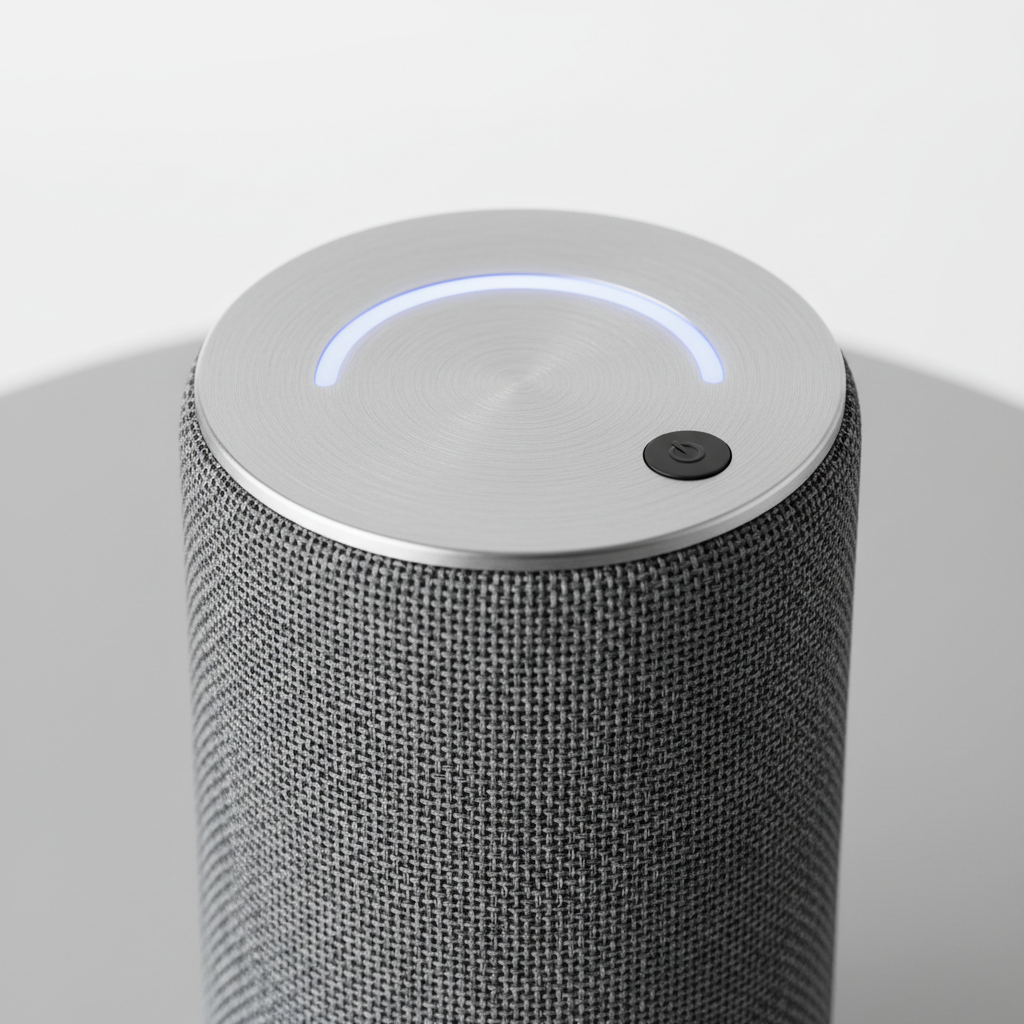

The best AI voice assistants 2026 has to offer are Amazon's Alexa+, Google's Gemini for Home, and Apple's Gemini-powered Siri. Alexa+ wins on device compatibility and cost if you already own Prime, Gemini for Home wins on natural conversation and camera search, and Siri wins on privacy for iPhone households. Which one fits you depends more on the ecosystem you already own than on raw AI quality.
Table of Contents
- What Changed in AI Voice Assistants for 2026?
- How Does Alexa+ Work in a Smart Home?
- What Can Google's Gemini for Home Speaker Do?
- Is Apple's Gemini-Powered Siri Ready for Smart Home Control?
- Alexa+, Gemini for Home, and Siri: Side-by-Side Comparison
- How Much Do These AI Voice Assistants Cost in 2026?
- Is Your Smart Home Data Safe With an AI Voice Assistant?
- Frequently Asked Questions
- Sources
All three assistants got a genuine AI upgrade this year, not just a new wake word. Alexa+ now runs on a mix of Amazon's own Nova models and Anthropic's Claude, Google's new $99 Home Speaker runs Gemini directly, and Apple rebuilt Siri around a custom Gemini model licensed from Google. Picking between them in 2026 comes down to three practical questions: what devices you already own, how much you want to pay monthly, and how much data sharing you're comfortable with.
What Changed in AI Voice Assistants for 2026?
The 2026 generation of voice assistants can hold a real conversation instead of just matching commands to a fixed list of phrases. Amazon opened Alexa+ to every US customer in February 2026, nearly a year after its limited preview, according to TechCrunch's February 2026 reporting. Google followed in June 2026 with a Gemini-native speaker, and Apple rebuilt Siri around a Google-licensed model that shipped with iOS 26.4 in March 2026.
What changed under the hood matters more than the marketing. Amazon's own announcement describes Alexa+ as able to "remember personal details and preferences from conversations you had days or even weeks ago," per Amazon's official product announcement. That's a real shift from the old skill-based Alexa, which forgot everything the moment you ended a request. Whether that memory feels helpful or a little unsettling probably depends on how much you already trust Amazon with your household data.
How Does Alexa+ Work in a Smart Home?
Alexa+ works by routing your request through a conversational engine that can act as an agent, not just answer a question. It can book a repair appointment, order a ride, or manage multiple smart home routines from a single fragmented sentence, according to Amazon's own product materials. The system supports interruptions mid-sentence and casual phrasing, so you no longer need to phrase things like a robot to get a useful answer.
Pricing is where the ecosystem lock-in becomes obvious. Starting in February 2026, Amazon began charging non-Prime users $19.99 a month for Alexa+, while it stayed free for the roughly $139-a-year Prime membership, per CNBC's coverage of the US rollout. If you're already paying for Prime, Alexa+ is effectively a free upgrade. If you're not, that's a steep bill to add on top of a smart speaker you may have already paid for once. Alexa+ also has the deepest existing device library of the three, since it inherited over a decade of third-party Amazon Echo and Echo Show smart home integrations.
What Can Google's Gemini for Home Speaker Do?
Google's Gemini for Home speaker understands multi-step, natural commands without requiring the rigid phrasing older Google Assistant devices needed. You can correct yourself mid-sentence, chain several requests together, or ask it to summarize what a camera saw earlier in the day. Google confirmed the new Google Home Speaker launched in June 2026 at $99, according to Google's own product blog.
The catch is that the most useful features sit behind a subscription. Gemini Live, Camera History Search, and daily Home Briefs all require a Google Home Premium plan, priced at $10 a month for Standard or $20 a month for Premium, with six months included free at purchase, per Google's announcement. That's a familiar pattern: the hardware is cheap, and the software that makes it genuinely smart costs extra every month after the trial ends. For a household that already has Nest cameras and thermostats, the subscription math is easier to justify than for someone starting from scratch.
Design and voice options
The speaker itself is a small, fabric-wrapped device with a physical microphone mute switch and a status light at its base, sold in four colors. Gemini ships with ten new voice options designed to sound less robotic than the original Google Assistant voice, a detail that matters more than it sounds like once you're hearing it dozens of times a day. For a broader look at how Alexa+ and Gemini now act as smart home orchestrators rather than simple command responders, it's worth comparing both companies' approach to multi-step automation.
Is Apple's Gemini-Powered Siri Ready for Smart Home Control?
Apple's rebuilt Siri is ready for smart home use for most HomeKit-compatible devices, but its most ambitious hardware, a dedicated smart home display, has not shipped yet. Apple rolled out the Gemini-powered Siri overhaul alongside iOS 26.4 in March 2026, then previewed a new operating system called homeOS at WWDC 2026 in June for an upcoming device combining a speaker, a 7-inch display, and an A18 chip, according to Tech Times' coverage of the WWDC 2026 keynote.
The technical setup behind the new Siri is unusual for Apple, a company that has spent a decade marketing itself as privacy-first. Reports describe a three-tier routing system: simple requests stay entirely on your Apple HomePod mini or iPhone, moderately complex ones go to Apple's Private Cloud Compute servers, and the hardest reasoning tasks are routed to a custom, roughly 1.2-trillion-parameter Gemini model running on Google Cloud hardware. Apple is reportedly paying Google around $1 billion a year for that arrangement. It's a pragmatic compromise, and it's worth knowing exactly which of your requests leave Apple's own servers if privacy is the main reason you bought an iPhone in the first place.
Alexa+, Gemini for Home, and Siri: Side-by-Side Comparison
Here is how the three main options stack up on the factors that matter most for a smart home setup: underlying model, price, and what each one is genuinely best at.
| Assistant | Powered By | Price | Smart Home Strength | Best For |
|---|---|---|---|---|
| Alexa+ | Amazon Nova and Anthropic Claude | Free with Prime, or $19.99/month | Largest existing device library | Existing Echo and Prime households |
| Gemini for Home Speaker | Google Gemini | $99 device, Home Premium $10 to $20/month | Natural multi-step commands, camera search | Nest and Google ecosystem households |
| Siri (Gemini-powered) | Custom 1.2T-parameter Gemini model, routed via Apple Private Cloud Compute | Included with compatible iPhone | Tiered on-device to cloud privacy routing | Existing HomeKit and iPhone households |
How Much Do These AI Voice Assistants Cost in 2026?
Costs range from effectively free to roughly $240 a year, depending on which ecosystem you're already in. Alexa+ is free if you already pay for Amazon Prime, or $19.99 a month standalone. Google's Gemini for Home speaker costs $99 upfront plus $10 to $20 a month after an initial six-month trial for the features that make it worth having. Siri's Gemini upgrade is bundled into iOS at no extra charge, though it only runs on recent iPhone models with enough on-device processing power.
None of these prices exist in a vacuum. The global smart speaker market is projected to reach $23.32 billion in 2026 and grow at a 22.5% compound annual rate, according to Fortune Business Insights. That growth is exactly why all three companies are willing to give away hardware cheaply and make their real money on monthly subscriptions instead. If you already own compatible speakers or a phone from one of these ecosystems, sticking with it is almost always cheaper than switching.
Is Your Smart Home Data Safe With an AI Voice Assistant?
Your smart home data is reasonably safe with any of the three major assistants, but "reasonably" depends on which parts of a conversation get processed locally versus sent to a server. Alexa+ and Gemini for Home both rely heavily on cloud processing to power their conversational memory, meaning more of what you say is stored and analyzed off-device than with older, command-based assistants. Apple's tiered approach keeps simple requests on-device and only sends complex reasoning to Private Cloud Compute or, in some cases, Google's servers.
None of the three companies has published a fully independent third-party audit of exactly how long voice data is retained once it leaves your home. That's worth sitting with before you enable always-listening features tied to cameras or door locks. How voice AI has already reshaped everyday smart home routines is a useful reference if you're deciding how far to lean into conversational control versus keeping some automations rule-based and local.
Frequently Asked Questions
What is the best AI voice assistant for a smart home in 2026?
There isn't one universal answer. Alexa+ is the strongest pick if you already use Amazon Prime and own Echo devices, Gemini for Home is the strongest pick for households with Nest hardware, and Siri is the strongest pick if privacy and existing HomeKit devices matter most to you.
Is Alexa+ free?
Alexa+ is free for Amazon Prime members. Without Prime, it costs $19.99 a month, a price Amazon confirmed when it opened the assistant to all US customers in February 2026.
Do I need a new speaker to get Gemini on Google devices?
You need Google's new $99 Home Speaker or a compatible recent Nest device to get the full Gemini for Home experience, including Gemini Live and Camera History Search, both of which require a paid Home Premium subscription after the free trial period.
Will the new Siri work with my existing HomeKit devices?
Yes. Apple's Gemini-powered Siri overhaul works with existing HomeKit-compatible devices through iOS 26.4 and later. Apple's separate homeOS and HomePad hardware, previewed at WWDC 2026, had not shipped as of this writing.
Which AI voice assistant shares the least amount of data with third parties?
Apple's Siri sends the fewest requests to third-party servers by default, thanks to its on-device-first routing, though its hardest queries still travel to Google Cloud under Apple's licensing deal. Alexa+ and Gemini for Home both depend more heavily on cloud processing for their conversational features.
Sources
- TechCrunch, "Alexa+, Amazon's AI assistant, is now available to everyone in the U.S.," February 2026, https://techcrunch.com/2026/02/04/alexa-amazons-ai-assistant-is-now-available-to-everyone-in-the-u-s/
- Amazon, "Introducing Alexa+, the next generation of Alexa," https://www.aboutamazon.com/news/devices/new-alexa-generative-artificial-intelligence
- CNBC, "Amazon makes Alexa+ AI assistant available to everyone in the U.S.," February 2026, https://www.cnbc.com/2026/02/04/amazon-alexa-plus-us-releas.html
- Google, "Meet the new Google Home Speaker, built for Gemini," https://blog.google/products-and-platforms/devices/google-nest/google-home-speaker-gemini-features/
- Tech Times, "Apple WWDC 2026: Siri Rebuilt on Gemini, homeOS Previewed in Cook Farewell Keynote," June 2026, https://www.techtimes.com/articles/317985/20260608/apple-wwdc-2026-siri-rebuilt-gemini-homeos-previewed-cook-farewell-keynote.htm
- Fortune Business Insights, "Smart Speaker Market Size, Share, Trends," https://www.fortunebusinessinsights.com/smart-speaker-market-106297