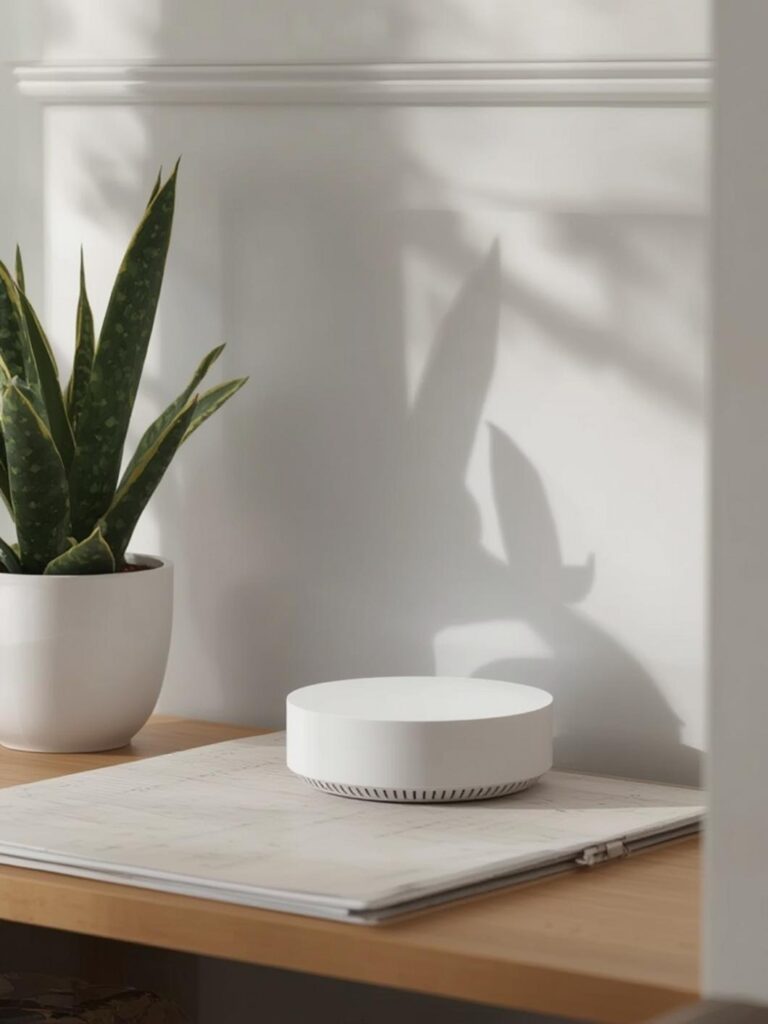


TL;DR: OpenAI is apparently working on a portable AI speaker: no screen, battery‑powered, able to roll around a room and use a built‑in camera to sense what’s happening. It won’t arrive until at least 2027, but it hints at a move away from static smart speakers toward mobile, camera‑savvy home helpers.
A movable AI speaker is a battery‑powered, screen‑free smart home gadget that can physically shift its position and use built‑in cameras and sensors to “see” the space around it, instead of staying glued to a shelf like most speakers today. Bloomberg and TechCrunch broke the story on July 14, 2026, and that report still feels like the loudest buzz that the speaker market is about to get a literal makeover. We previously walked through the whole rumor trail in our OpenAI Smart Speaker guide. Here, we zoom in on the mobility side of things and explore how it might nest in a typical household.
What Is OpenAI’s Movable AI Speaker?
Think of OpenAI’s movable AI speaker as a screen‑less, rechargeable device that can roll or shuffle itself instead of staying stuck on a countertop. Bloomberg’s July 14, 2026 report says the product aims to be more of an AI companion for the home than a simple voice button for lights and thermostats. It packs a camera and extra sensors so it can tell who’s in the room, what they’re doing, and respond in kind.
The hardware story goes back to OpenAI’s purchase of Jony Ive’s startup io. In 2025, OpenAI shelled out roughly $6.4 billion in an all‑stock deal, according to CNBC, bringing Ive’s LoveFrom studio and a cadre of ex‑Apple engineers onto the project. Imagine a speaker with legs, something that can wheel over to the person speaking. That’s a bold design gamble compared with anything Amazon, Google, or Apple have released so far.
How Is a Movable AI Speaker Different From a Screen-Free Smart Speaker Like Echo or Nest?
The biggest distinction isn’t just software; it’s the ability to move and sense context. The Amazon Echo and the audio‑only Google Nest Audio both ditch screens, but they stay put wherever you plug them in. OpenAI’s take adds a battery and motorized parts, letting the unit travel from a kitchen counter to a side table without losing power or Wi‑Fi.
The camera is the other game‑changer. Most screen‑free speakers listen only through mics, limiting them to voice commands. A camera‑enabled, mobile unit could, at least in theory, notice you’ve entered the kitchen and start reading a recipe before you even ask. Whether that feels helpful or a bit too nosy will hinge on how transparently OpenAI handles the data, details the company hasn’t released yet.
How Much Will a Movable AI Speaker Cost?
No one outside OpenAI has confirmed a price tag, because there’s still no official launch announcement as of mid‑2026. Considering the extra hardware (battery, camera, sensors, and motors), a price north of the current $100‑$230 range for standard screen‑free speakers feels plausible, but that’s pure speculation, not a disclosed figure.
That potential premium matters. If the device ends up costing more like a mid‑range tablet than a $50 speaker, many families will have to rethink whether they need another gadget or just stick with the fixed speakers they already own. Ultimately, the worth of a mobile, camera‑equipped assistant will be judged by how smoothly the mobility works in everyday life, not just by flashy demos.
Movable AI Speaker vs. Static Smart Speakers: A Side-by-Side Look
Below is a quick comparison of OpenAI’s rumored device against three popular smart home hubs already sold in the U.S.
| Device | Screen | Mobility | Onboard Camera | US Availability |
|---|---|---|---|---|
| OpenAI movable AI speaker (“Sweetpea”) | None | Battery‑powered, can reposition | Yes | Not before 2027 |
| Amazon Echo (Alexa+) | None on base models | Fixed | No | Now |
| Google Nest Hub Max | Yes | Fixed | Yes | Now |
| Apple HomePod | None | Fixed | No | Now |
Every product on the market today trades one feature for another: screens for privacy, cameras for context, portability for simplicity. OpenAI’s pitch is that you shouldn’t have to make those compromises, but a working prototype in homes is still more than a year away.
Why Does a Camera-Equipped Speaker That Moves Around Your House Raise Privacy Questions?
Because it expands both what the device can see and where it can see it from. A stationary speaker watches a single spot, say a kitchen counter. A mobile one can wander into bedrooms, home offices, or any room you carry it into, which raises a whole new set of privacy concerns.
OpenAI hasn’t released a data‑handling policy for this specific gadget, since the product itself hasn’t been officially announced. That silence is noteworthy. If you’re already uneasy about an always‑listening mic on a static Sonos Era 100, a roaming speaker with a camera will feel even tighter. Trust will hinge on things like local processing, clear indicator lights, and a tangible shutter for the lens.

Will a Movable AI Speaker Work With Your Existing Smart Home Setup?
Most likely it will complement, rather than replace, your current smart home, assuming OpenAI builds in support for standards like Matter and Thread. Bloomberg and TechCrunch didn’t spell out protocol support in their July 2026 coverage, so we can’t confirm that yet.
People who already run an AI‑agent smart home platform that ties together locks, thermostats, and cameras will want to know whether the new speaker plugs into that ecosystem or tries to become a separate hub. Our best smart home hubs comparison can help you gauge how “plays‑well‑with‑others” looks in practice, because most buyers aren’t willing to tear out a working Matter setup for a single new device.
What’s Delaying the Launch, and When Can You Buy One?
The hold‑up isn’t the concept itself but a trademark fight and a longer‑than‑expected hardware timeline. OpenAI initially labeled the line “io,” echoing Jony Ive’s acquired startup, but a rival called iyO sued over the name in 2025. A federal court sided with iyO in April 2026, per 9to5Mac, blocking OpenAI from using “io” on devices.
OpenAI abandoned the “io” moniker earlier this year and now refers to the project internally as “Sweetpea.” MacRumors reported in February 2026 that the company doesn’t expect to ship the first units until the end of 2027. That’s a long runway for a device that, as of mid‑2026, lives only in anonymous tips and leaked specs, not an official OpenAI announcement.
Practical Room-by-Room Use Cases for a Movable AI Speaker
The clearest scenario is context‑aware assistance that follows the household’s real routine instead of waiting on a static spot. In the kitchen, the speaker could spot a recipe app open on your phone and start reading the next step before you utter a wake word. In a home office, it might detect a video call starting and mute itself automatically.
Parents juggling a voice‑AI smart home setup for young kids might appreciate a unit they can slide into a nursery at night and move back to the living room by day, without needing a second speaker. Renters, who often can’t install wall‑mounted hubs, could also benefit from a battery‑powered, portable option. Of course, none of this is guaranteed to ship exactly as described; leaked hardware plans shift a lot between the first rumor and the retail box.
Older adults living alone are another group worth mentioning. A mobile assistant that can follow someone from room to room could double as a gentle check‑in tool, noticing if someone hasn’t been in the kitchen at their usual mealtime. That kind of passive monitoring brings its own consent questions, underscoring why OpenAI’s eventual privacy details will matter more for this device than for a stationary speaker that never leaves the counter.
Right now, a movable AI speaker is still a bundle of leaked specs and a court case away from being a shelf‑ready product. The 2027 timeline, the abandoned “io” name, and the unanswered privacy concerns all point to a device that’s farther from launch than the early headlines suggested. If you’re shopping for a smart home hub today, focus on what’s already on the market, like Echo, Nest, and HomePod, and treat OpenAI’s offering as a 2027 story to revisit later.
Frequently Asked Questions
What is OpenAI’s movable AI speaker?
It’s a rumored screen‑free, battery‑powered home gadget with a camera and motorized parts that let it reposition itself, rather than staying fixed like a traditional smart speaker.
When will OpenAI’s movable AI speaker be available?
MacRumors reported in February 2026 that OpenAI doesn’t expect to ship the device before the end of 2027, and the company has not made an official product announcement as of mid‑2026.
Why is the device called “Sweetpea” instead of “io”?
OpenAI originally used the “io” name from its 2025 acquisition of Jony Ive’s startup, but dropped it in 2026 after a court sided with rival company iyO in a trademark dispute, according to 9to5Mac.
Does the movable AI speaker have a camera?
Yes. Both Bloomberg and TechCrunch reported on July 14, 2026 that the device includes an onboard camera and additional sensors to help it understand the room and context around it.
Will a movable AI speaker replace my existing smart home hub?
That’s still unclear. No official details on Matter or Thread support have been disclosed, so households with an existing smart home hub should expect this device to add a new capability rather than replace their current setup, at least at launch.
Sources
- Bloomberg, “OpenAI’s First Device Will Be Movable, Screenless Speaker Built as AI Companion,” July 14, 2026, bloomberg.com
- TechCrunch, “OpenAI’s first hardware device is reportedly a screenless speaker that can move,” July 14, 2026, techcrunch.com
- CNBC, “OpenAI buys iPhone designer Jony Ive’s device startup for $6.4 billion,” May 21, 2025, cnbc.com
- 9to5Mac, “Court sides with iyO in trademark fight against OpenAI and Jony Ive,” April 24, 2026, 9to5mac.com
- MacRumors, “OpenAI’s Jony Ive-Designed Device Delayed to 2027,” February 10, 2026, macrumors.com